Blog
BEN ALLAL Mohamed
- Morocco - Born : 1924 in Marrakech
Mohamed Ben Allal, born in Marrakech in 1924 and passed away in 1995, is considered one of the very first naïve painters in Morocco. Coming from a modest background, he was introduced to painting thanks to the encouragement of the painter Jacques Azéma.
Très jeune, Ben Allal s’imprègne de son environnement en observant la vie dans les souks de Marrakech et en écoutant les conteurs de la place Jamaa El Fna. Des moments qui nourriront plus tard son imaginaire pictural.
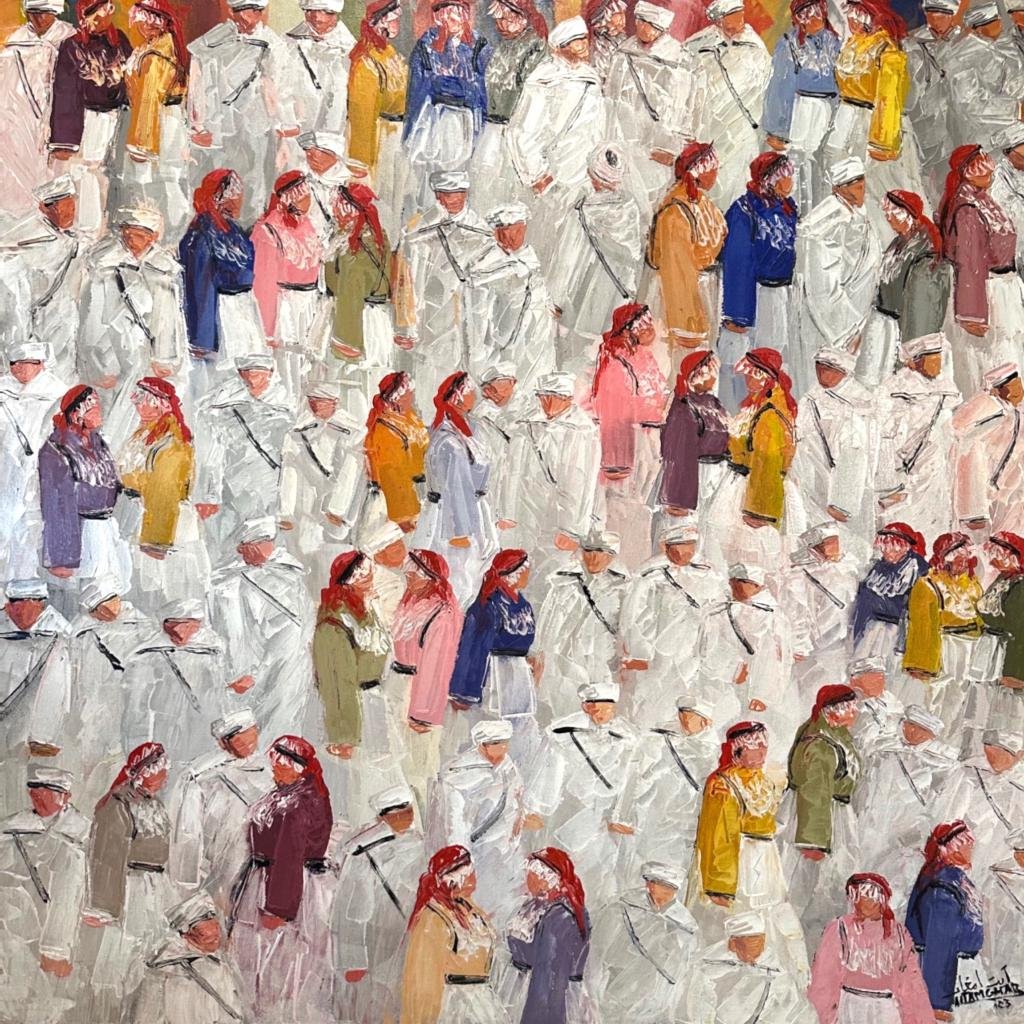
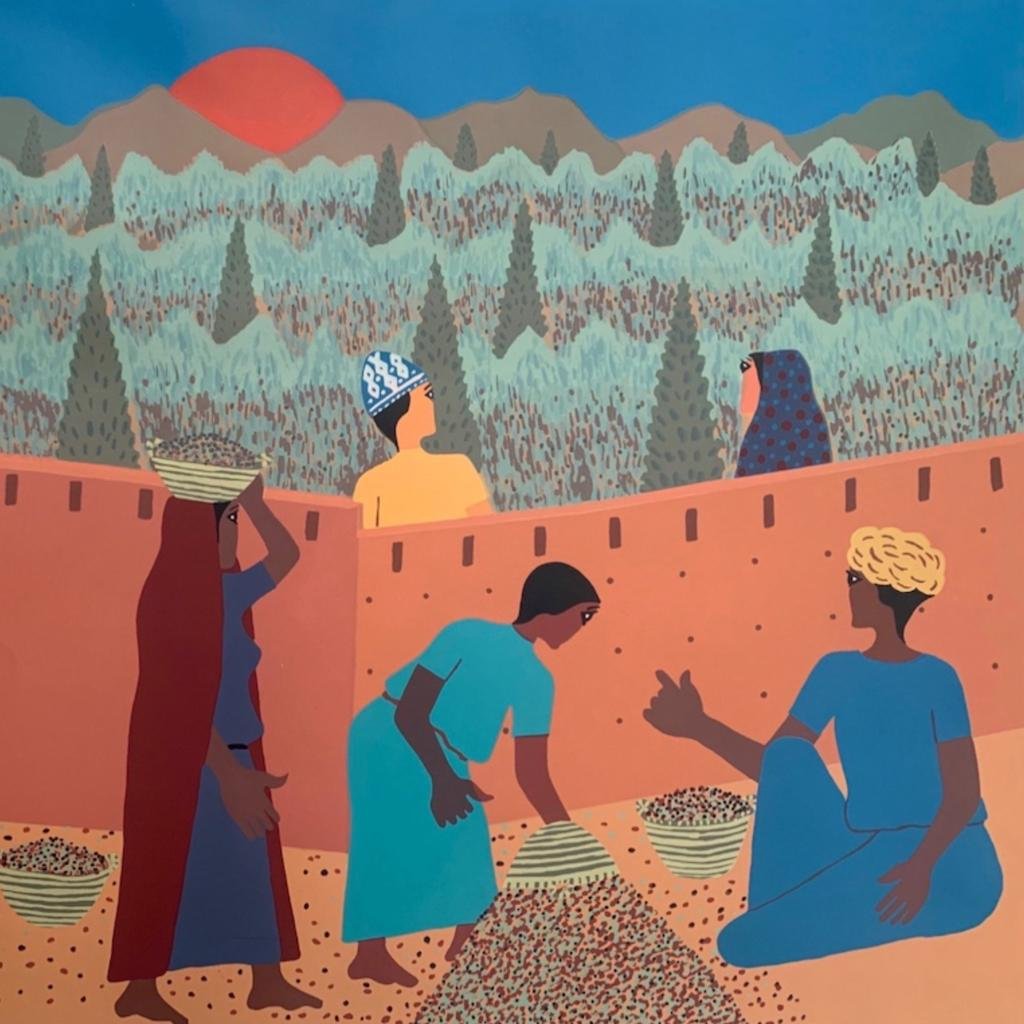
A self-taught artist, Mohamed Ben Allal developed a narrative painting style with anecdotal themes, reconstructing his universe from collective imagination. His works depict scenes of daily life: social and family rituals, the world of the souks, popular festivals, and artisanal practices, where each gesture is brought back to its essential meaning.
His pictorial language, marked by flattened perspectives, the pronounced frontal presentation of figures, and a rich, expressive palette, gives his compositions a visual intensity reminiscent of oral storytelling. The recurring colors in his works evoke the landscapes of southern Morocco and the kasbahs that inspired him.
With the support of Jacques Azéma, he participated in 1953 in a group exhibition alongside Moulay Ahmed Drissi, Hassan El Glaoui, and Farid Belkahia. His compositions then achieved widespread acclaim, both within Morocco and beyond its borders.
BEN ALLAL Mohamed
- Morocco - Born : 1924 in Marrakech
Mohamed Ben Allal, born in Marrakech in 1924 and passed away in 1995, is considered one of the very first naïve painters in Morocco. Coming from a modest background, he was introduced to painting thanks to the encouragement of the painter Jacques Azéma.
Très jeune, Ben Allal s’imprègne de son environnement en observant la vie dans les souks de Marrakech et en écoutant les conteurs de la place Jamaa El Fna. Des moments qui nourriront plus tard son imaginaire pictural.
A self-taught artist, Mohamed Ben Allal developed a narrative painting style with anecdotal themes, reconstructing his universe from collective imagination. His works depict scenes of daily life: social and family rituals, the world of the souks, popular festivals, and artisanal practices, where each gesture is brought back to its essential meaning.
His pictorial language, marked by flattened perspectives, the pronounced frontal presentation of figures, and a rich, expressive palette, gives his compositions a visual intensity reminiscent of oral storytelling. The recurring colors in his works evoke the landscapes of southern Morocco and the kasbahs that inspired him.
With the support of Jacques Azéma, he participated in 1953 in a group exhibition alongside Moulay Ahmed Drissi, Hassan El Glaoui, and Farid Belkahia. His compositions then achieved widespread acclaim, both within Morocco and beyond its borders.